
The web developer with the most impressive portfolio may not be the right fit for your business. If technical jargon makes proposals hard to compare, or a polished example leaves you unsure how the finished site will work day to day, you’re asking the right question: how to choose a web developer who can meet your actual needs?
A sound choice depends on more than visual style. You need to know what the website must do, how the developer will define and manage the work, and how they’ll keep you informed. This guide gives you a practical way to compare those factors without needing to speak in technical terms.
You’ll learn how to define your project, assess relevant experience beyond portfolio screenshots, and compare capabilities, process and communication. You’ll also see what to clarify about scope before work begins, so expectations are shared from the start. Whether you need a focused website or a broader digital system, ADA Web develops websites, portals and platforms, while Andreas Digital Agency brings website, software, IT and marketing capabilities together.
Key Takeaways
- Learn how to choose a web developer by matching your project’s needs with relevant experience, clear communication and a workable process.
- Assess portfolio examples by their purpose, audience and complexity, not just their visual style.
- Compare proposals against the same brief, paying attention to scope, deliverables, responsibilities, dependencies and handover.
- Prepare requirements, content, brand materials and system information to give the project a clearer starting point.
- ADA Web develops websites, portals and digital platforms, with wider agency capabilities for businesses considering a broader digital system.
Start with the business problem before choosing a web developer
A polished portfolio can show that a developer knows how to make a site look finished. It can’t tell you whether that site solved a problem like explaining services clearly, making it easier to submit an enquiry, or helping staff manage information. If you’re working out how to choose a web developer, start with the work your business needs the website to do, not the appearance of someone else’s project.
A web developer builds and maintains websites and the functions behind them. The role is more specific than general digital support, which may cover areas such as IT, marketing or branding. Web development can involve different parts of a site, from what visitors see to the systems that handle information. For a plain-language overview of understanding web development, see Wikipedia’s introduction to the field.
Write down the outcome you need before comparing developers. This gives you a practical reference for judging their skills, proposed approach and scope. The right fit is a developer whose capabilities match the project’s purpose and complexity.
Which digital project does your business actually need?
A business website is a public-facing place to explain what the organisation does and guide visitors towards useful next steps, such as making an enquiry. A portal serves a more defined group of users, often giving them access to information or tasks. A platform may support a broader set of interactions or processes. The distinction is less about labels than about who will use the system and what they need to do.
Consider the work behind the screen. Is the project mainly about presenting information, or must it support customer access, internal processes or information handling across different users? More users, steps and connections to existing systems can mean a more involved project. Describe those needs in everyday terms first. For example, “customers need to find service details and send an enquiry” is more useful than naming a feature before its purpose is clear.
Turn the business need into a clear project brief
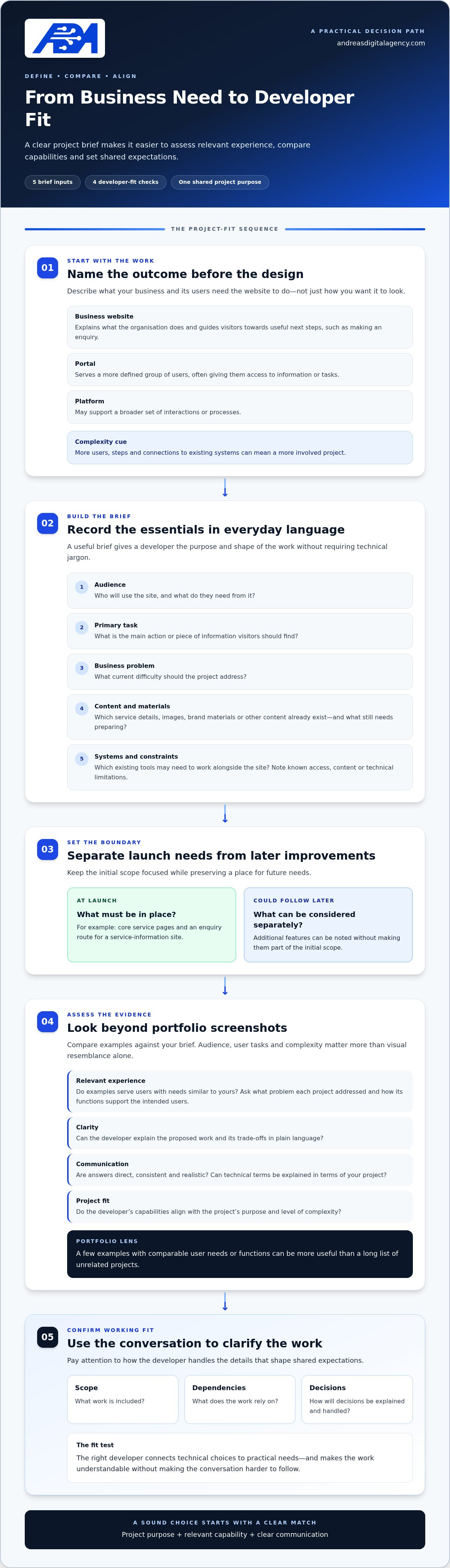
A useful brief records what the site should help people accomplish and what your business needs to improve. It doesn’t need to name a programming language or prescribe a technical solution. Set out the basics so a developer can understand the purpose and shape of the work.
- Audience: Who will use the site, and what do they need from it?
- Primary task: What is the main action or piece of information visitors should find?
- Business problem: What current difficulty should the project address?
- Content and materials: What service details, images, brand materials or other content already exist, and what still needs preparing?
- Systems and constraints: Note any existing tools the site may need to work alongside, plus known access, content or technical limitations.
Then separate what must be in place at launch from improvements that could follow later. For example, a clear service-information site may need core service pages and an enquiry route first, while additional features can be considered separately. This keeps the initial scope focused without losing sight of future needs. A concise brief gives you a sound basis for discussing the project and comparing proposals.
How to evaluate a web developer beyond the portfolio
A portfolio is a starting point, not a verdict. A strong-looking site may have been built for a very different audience or purpose from yours. To decide how to choose a web developer, compare evidence against your project brief and notice how the developer explains the work, not just how the finished pages look.
Use the same short checklist for each conversation:
- Relevant experience: Do their examples serve users with needs similar to yours?
- Clarity: Can they explain the proposed work and its trade-offs in plain language?
- Communication: Are answers direct, consistent and realistic?
- Project fit: Do their capabilities align with your project’s purpose and level of complexity?
This keeps the comparison practical. A large portfolio can be less useful than a few examples that show the developer has handled comparable user needs or functions.
Assess relevant work and technical fit
Look beyond visual resemblance. A site with colours and layouts like your own may still differ in what it needs to do. Consider the intended audience, the tasks users complete and the complexity behind the pages. For example, experience building a straightforward information site may not demonstrate experience with a portal where users access different information or complete tasks.
Focus on what each example demonstrates. Can the developer describe the problem it addressed, the approach taken and how the relevant functions support the intended users? You don’t need to judge the code yourself. You do need an explanation that connects the technical choices to practical needs. Relevant evidence matters more than a long list of unrelated projects.
Use communication as evidence of working fit
Pay attention to how the developer handles questions about scope, dependencies and decisions. Clear answers, realistic explanations and consistent terminology help you understand what the work involves. If a technical term comes up, a capable communicator can explain what it means for your project without making the conversation harder to follow.
Confidence alone isn’t proof. Treat promises of effortless work or guaranteed results cautiously. A sound explanation makes room for requirements, dependencies and decisions that can affect the process. Clear communication helps both sides share expectations, make timely decisions and keep the work organised.
ADA Web develops websites, portals and platforms as part of Andreas Digital Agency’s broader digital offering. Explore ADA’s website and digital-systems services to see how this work fits alongside the agency’s other capabilities.
Compare web developer proposals by scope, responsibilities and value
Once you have a project brief, use the same brief to compare every proposal. Headline claims such as “custom website” or “complete solution” don’t explain what work is included. A consistent comparison makes differences visible before you agree to a scope. Proposals are only comparable when their scope and responsibilities are clear.
Lay out the details side by side. Record what each developer will deliver, what your team must provide, what the work depends on and what happens at handover. If a proposal leaves an item unclear, mark it as an open point rather than assuming it’s included.
What should a clear website proposal explain?
A clear proposal describes the work, its outputs and the assumptions behind them. It should distinguish agreed launch requirements from possible future improvements, so later ideas don’t blur the initial scope. The details will vary: a public-facing website may focus on pages and enquiry functions, while a portal or platform may involve different users, processes and information needs.
Use a simple comparison table to organise the information:
| Area | Proposal A | Proposal B |
|---|---|---|
| Scope | What work is included, and what is excluded? | What work is included, and what is excluded? |
| Deliverables | What will be supplied for launch? | What will be supplied for launch? |
| Client responsibilities | What content, decisions or access must your team provide? | What content, decisions or access must your team provide? |
| Dependencies | Which existing systems, approvals or inputs affect the work? | Which existing systems, approvals or inputs affect the work? |
| Handover | What information or materials will you receive when the project ends? | What information or materials will you receive when the project ends? |
Also note assumptions and exclusions. If a proposal depends on you supplying written content, for example, record that beside the deliverables. This helps both sides see where a delay or change in requirements could affect the plan.
How to compare project value without relying on price alone
Project fees depend on the work defined in the proposal, so assess them alongside the deliverables and responsibilities rather than against unsupported industry averages. An unclear low figure cannot be compared fairly with a defined scope. One proposal may address the intended users and business problem closely, while another may leave key functions or handover details out.
As you work out how to choose a web developer, compare what each proposal includes, where decisions are needed and what your team will be responsible for. Check whether future improvements are presented separately from launch work, and whether the handover gives you a clear understanding of what you’ll receive. Value comes from fit and clarity, not from a headline figure alone.
Prepare your business for a productive web development project
Good preparation gives the project a steadier start. It helps the developer understand what exists, what needs to change and who can make decisions, so planning is based on the real work rather than assumptions. It also gives your team a clearer role once development begins.
What to prepare before development starts
Work through these steps in order. You don’t need to have every answer finalised, but gathering the essentials will make early discussions more useful.
- Collect current information. Bring together existing website details, core business information, brand materials and content that should appear on the new site. Note what is ready to use and what needs writing, updating or approval.
- List user needs and requirements. Record the main tasks people need to complete and any functions the project must support. Keep the focus on what users and staff need to do, rather than choosing technical features in advance.
- Map relevant systems. Note the tools, services or internal systems the project may need to connect with. Include known access requirements or constraints, since these can affect scope and planning.
- Assign decision-makers. Identify who approves content, design direction and functional choices. If several people contribute, agree who gathers their feedback and makes the final decision.
These steps make dependencies easier to see. For example, if a site needs current service information and brand files, knowing who will supply and approve those materials helps the team plan around them. Timely access to relevant system information also allows requirements to be discussed before they become late-stage surprises.
Agree on responsibilities and project communication
Before work starts, make responsibilities clear. Decide who supplies content, who reviews drafts or design work, and who gives final approval. Agree how feedback will be collected and returned, since conflicting comments or delayed decisions can interrupt progress. A shared record of decisions helps everyone work from the same understanding.
Set out the project’s agreed milestones and feedback windows with the developer. These are planning points, not a universal schedule: duration depends on scope, dependencies, the material available and how quickly decisions are made. A focused website and a platform with multiple user needs may involve different work, so timing should follow the defined project rather than an assumed standard.
Discuss ownership and handover before launch. Establish who will have access to the website and related accounts, what information or materials will be handed over, and how your team expects to handle future content changes. That clarity helps you plan for day-to-day administration instead of treating launch as the end of every responsibility.
Preparing these details gives your developer a more workable starting point and your business a clearer role throughout the project. Explore web development with Andreas Digital Agency for website, portal and platform projects.
Choose a web development partner that can support the right scope
The decision comes down to fit: does the developer understand the project’s purpose, show relevant evidence, define the work clearly and communicate in a way your team can work with? That framework helps answer how to choose a web developer without relying on portfolio polish or broad promises alone. It also helps you distinguish a focused website project from a wider digital system.
ADA Web develops websites, portals and digital platforms. Andreas Digital Agency brings website, software, IT and marketing capabilities together, which can be useful when a business’s digital needs connect across more than one area. Not every website project requires that wider scope. Start with what your organisation needs users or staff to do.
When a focused website project is the right fit
A public-facing website may be the right scope when your main need is to explain your business, present services and give visitors a clear way to make an enquiry. The brief can focus on the audience, information to publish and key actions the site should support. ADA Web develops websites for businesses with these kinds of defined needs.
Bring your goals and available content into the first conversation. A clear brief helps keep discussion grounded in the site’s purpose, required pages and responsibilities, rather than expanding the project before there is a reason to do so.
When connected digital capabilities may matter
Some business needs extend beyond public information. A portal may serve a defined group of users, while a platform or software may support processes involving different tasks or information. If your project includes these needs alongside a website, consider how they relate and what belongs in the initial scope. That doesn’t mean every capability must be part of one project; it means the requirements should be considered together before decisions are made.
ADA’s wider capabilities include websites, software, IT and marketing, alongside ADA Web’s work on portals and platforms. This combination can be relevant for businesses considering connected digital requirements, while the project scope should still be based on actual needs. Clear boundaries help separate essential work from options that can be considered later.
As you make your choice, check that the proposed capabilities match the project, the evidence relates to your users and functions, the scope is understandable, and communication supports shared decisions. These practical points create a stronger basis for a working relationship and a clearer next step.
Discuss your website or digital-systems project with ADA to explore a scope that fits your business needs.
Turn your project brief into a confident next step
A useful brief shouldn’t sit in a folder once the project begins. Keep it as a shared reference for decisions, so new ideas can be weighed against the purpose and priorities your business agreed on. If needs change, record what’s different and consider whether the change belongs in the current scope or a later phase.
Your next step can be simple: write down the main business need, who the website or system is for, and what you want those users to be able to do. Add the questions your team still needs answered. This gives everyone a practical starting point for discussing the work without needing to settle every technical detail first.
That clarity also makes it easier to have a focused project conversation. Bring your website or digital-systems project to Andreas Digital Agency when you’re ready to discuss the work.
Start with the need, keep the scope grounded and take the next step at a pace that works for your business.
Frequently Asked Questions
How much does it cost to hire a web developer?
There isn’t one fixed cost for hiring a web developer because projects can involve very different amounts of work. A small site with a few informational pages differs from a project with custom functions, user accounts or links to existing systems. For a useful estimate, define what the developer will deliver and what your team will supply, then compare proposals based on that same scope.
How long does it take to develop a business website?
The duration depends on the website’s scope, the materials available, any system dependencies and how quickly decisions are made. A project can take longer if content is still being prepared or approvals are delayed. Before work begins, agree on a schedule tied to project stages, such as content review and design approval. That gives your team practical checkpoints without relying on a universal timeframe.
Can I update my website after it launches?
Usually, yes, but the process depends on how the site is built and what access or editing tools are provided. Before launch, establish which updates your team can make, such as changing text or adding a news item, and which may need technical help. Include the relevant login details and guidance in the handover so routine edits don’t become a bottleneck.
Do I need a web developer if I use a website builder?
Not necessarily. A website builder may be enough if your needs are straightforward and you’re comfortable creating and maintaining the site yourself. A developer can be useful if you need custom functions, connections to other systems, or help resolving limits that affect your users. As you decide how to choose a web developer, consider whether the builder can support your requirements as they stand, not just how quickly you can publish a basic page.
What happens if my website needs changes after development?
Changes can be handled by your team or through further development, depending on their size and the access and documentation you receive. Correcting a service detail may be a routine content edit, while adding a booking flow could require additional planning and work. Before the project closes, clarify who controls the site, how changes are requested and how new work will be scoped.
Should I choose a freelancer or a web development agency?
Either can suit a business, depending on the project and the coordination it needs. A freelancer may fit a clearly defined piece of work with a limited set of requirements. An agency may suit projects that bring together several areas, such as website development, software and marketing. Compare the proposed responsibilities, communication approach and handover arrangements, then choose the structure that best matches your team’s needs.

